


Why a 2-Second Website is Too Slow in 2026 (And How to Reach Sub-500ms)
Date: 18/03/2026
Summary
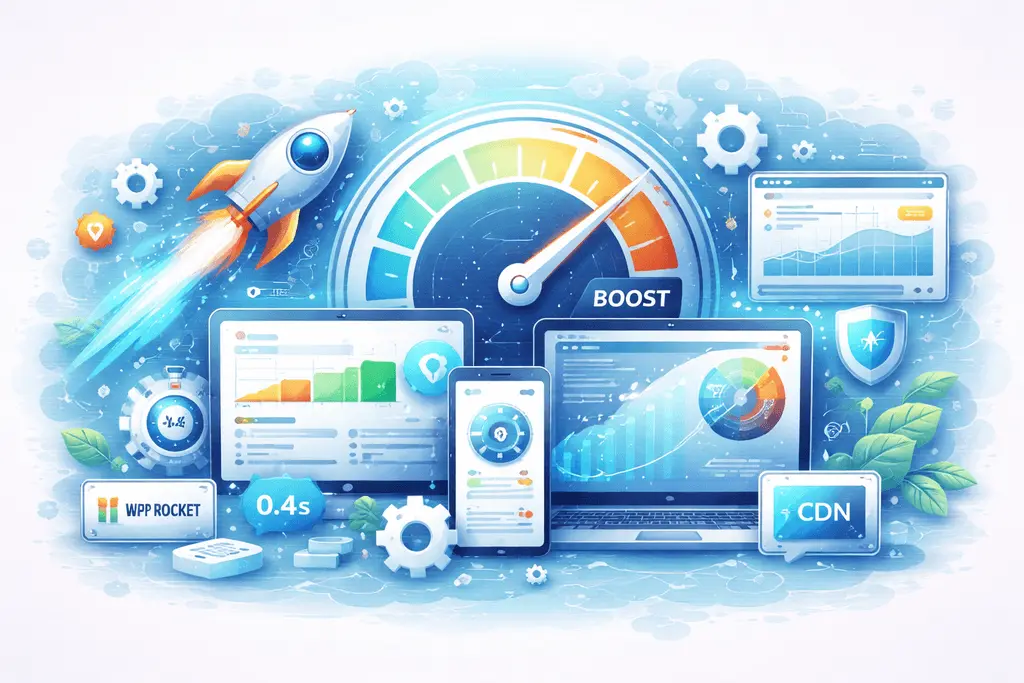
For years, a 2-second load time was considered “fast enough.” In 2026, that standard is no longer competitive.
Users expect instant, app-like experiences, and even small delays directly impact revenue. If your WordPress site isn’t loading in under 500ms, you’re likely losing traffic, conversions, and SEO visibility.
In this guide, we’ll explain why 2 seconds is too slow, and how to achieve sub-500ms performance using the right combination of plugins, APIs, and custom architecture.
In 2026, website performance is no longer just a technical metric—it directly impacts revenue. If you’re not optimizing for both speed and visibility, you may also struggle in AI-driven search environments (see our guide on Generative Engine Optimization (GEO)).
The New Speed Standard: Instant Web
Modern platforms like:
-
Google
-
Amazon
-
Meta
have conditioned users to expect instant responses.
Anything slower than ~1 second now feels broken.
What Is a “Fast” Website in 2026?
Achieving these benchmarks also plays a critical role in search rankings. Learn more in our WordPress SEO checklist for 2026.
-
TTFB: < 100ms
-
LCP: < 1s
-
Full Load: < 500ms
Measure with Google PageSpeed Insights — but optimize for real users, not just scores.
How to Reach Sub-500ms in WordPress
1. High-Performance Hosting (Foundation)
Your stack matters more than any plugin.
Recommended approach:
-
Cloud hosting (AWS, GCP, DigitalOcean)
-
Managed WP hosting (Kinsta, WP Engine)
Advanced setups:
-
Nginx + FastCGI cache
-
LiteSpeed servers
Plugin / Tools:
-
LiteSpeed Cache (if using LiteSpeed server)
-
Query Monitor (to detect slow queries)
👉 Pro tip: No plugin can fix bad hosting. This is step #1 always.
2. Full-Page Caching (Biggest Win)
Without caching, WordPress rebuilds pages on every request.
Use:
-
Server-level cache (best)
-
Plugin-based fallback
Top plugins:
-
WP Rocket
-
W3 Total Cache
Advanced:
-
Varnish Cache (server level)
-
Nginx FastCGI cache
👉 Result: Reduces load time from ~2s → ~200ms instantly.
Caching is one of the most impactful optimizations. For a complete technical breakdown, see our guide on top WordPress plugins for performance and caching.
3. CDN + Edge Delivery
A CDN brings your content closer to users globally.
Top CDN:
-
Cloudflare
What to enable:
-
Edge caching
-
HTTP/3
-
Brotli compression
Advanced:
-
Cloudflare Workers (edge logic)
-
Full HTML caching at edge
👉 Result: Global performance becomes consistent.
4. Image Optimization (Huge Impact)
Images are often 50–80% of page weight.
Best plugins:
-
ShortPixel
-
Imagify
Best practices:
-
Convert to WebP / AVIF
-
Use responsive images
-
Lazy load below the fold
Advanced:
-
Serve images via CDN (Cloudflare Images / Imgix API)
👉 Result: -40% to -70% page weight.
Image optimization is critical for both speed and SEO performance. We cover this in detail in our SEO checklist.
5. JavaScript & CSS Optimization
Most slow sites suffer from JS bloat.
Top plugins:
-
Perfmatters
-
Autoptimize
Key optimizations:
-
Defer JS
-
Delay JS execution
-
Remove unused CSS
Dev-level approach:
-
Split bundles (Webpack / Vite)
-
Inline critical CSS
👉 Pro tip: Elementor-heavy sites often fail here.
Reducing JavaScript bloat is especially important for modern themes and page builders. Learn how to choose the right approach in our Gutenberg vs Elementor vs ACF guide.
6. Lightweight Theme & Architecture
Theme choice = performance ceiling.
Best approaches:
-
Custom theme (ACF-based)
-
Block theme (Gutenberg optimized)
Avoid:
-
Heavy multipurpose themes
-
Overuse of page builders
Tools:
-
Advanced Custom Fields
-
Gutenberg
👉 Result: Clean DOM = faster rendering.
7. Edge Rendering & Headless (Advanced)
For sub-500ms globally, consider modern architecture.
Options:
-
Headless WordPress (Next.js frontend)
-
Static generation (SSG)
Tools:
-
Next.js + WordPress API
-
WPGraphQL
APIs:
-
WordPress REST API
-
GraphQL API
👉 Result: Near-instant UX worldwide.
8. Database Optimization
Slow DB = slow backend.
Plugins:
-
WP-Optimize
Advanced:
-
Redis object cache
-
Query optimization
-
Reduce autoloaded options
👉 Pro tip: WooCommerce sites suffer most here.
9. Limit Third-Party Scripts
Every script = extra latency.
Typical offenders:
-
Analytics tools
-
Chat widgets
-
Marketing pixels
Solutions:
-
Load scripts conditionally
-
Use tag managers efficiently
👉 Advanced: Move scripts to server-side tracking.
10. Real-Time Monitoring
Optimization is ongoing.
Tools:
-
Google PageSpeed Insights
-
GTmetrix
Advanced:
-
Real User Monitoring (RUM)
-
New Relic / Datadog
👉 Measure real experience, not lab scores.
Common Mistakes That Kill Performance
Plugin Overload
Too many plugins = slow site.
👉 Use fewer, better plugins.
Ignoring Mobile Performance
Mobile = majority of traffic.
👉 Test on real devices, not just desktop.
No Performance Strategy
Random optimizations don’t work.
👉 You need a system-level approach.
The Future: Instant, Predictive Web
Performance is moving toward:
-
edge-first delivery
-
AI-based optimization
-
predictive preloading
-
serverless WordPress
Websites will soon feel like native apps.
Final Thoughts
A 2-second load time in 2026 is already a competitive disadvantage.
To win in modern search and user experience, your website must be:
-
fast
-
scalable
-
intelligently optimized
Reaching sub-500ms is absolutely possible — but only with the right architecture and expertise.
If your WordPress site isn’t hitting modern speed benchmarks, you’re leaving revenue on the table.
At Betlace, we build:
-
ultra-fast WordPress architectures
-
sub-500ms performance systems
-
scalable, enterprise-ready platforms
-
conversion-focused websites
🚀 Contact Betlace today and let’s turn your website into a high-performance growth engine.
Trending articles

Ukraine vs Poland vs Balkans: Where to Hire the Best WordPress Developers in 2026
Why Eastern Europe Is the Smartest Place to Hire a WordPress Agency in 2026

Funnel Flattening: How Modern WooCommerce Stores Remove Checkout Friction

AI-Powered WooCommerce: How Smart Personalization Increases Conversions
╳
We`d love
to hear
from you
to hear
from you
Get a Best Project Consultation
Congratulations!
Message sent successfully!