


How to Build an AI-Native WordPress Website in 2026 (Beyond Chatbots)
Date: 14/03/2026
Summary
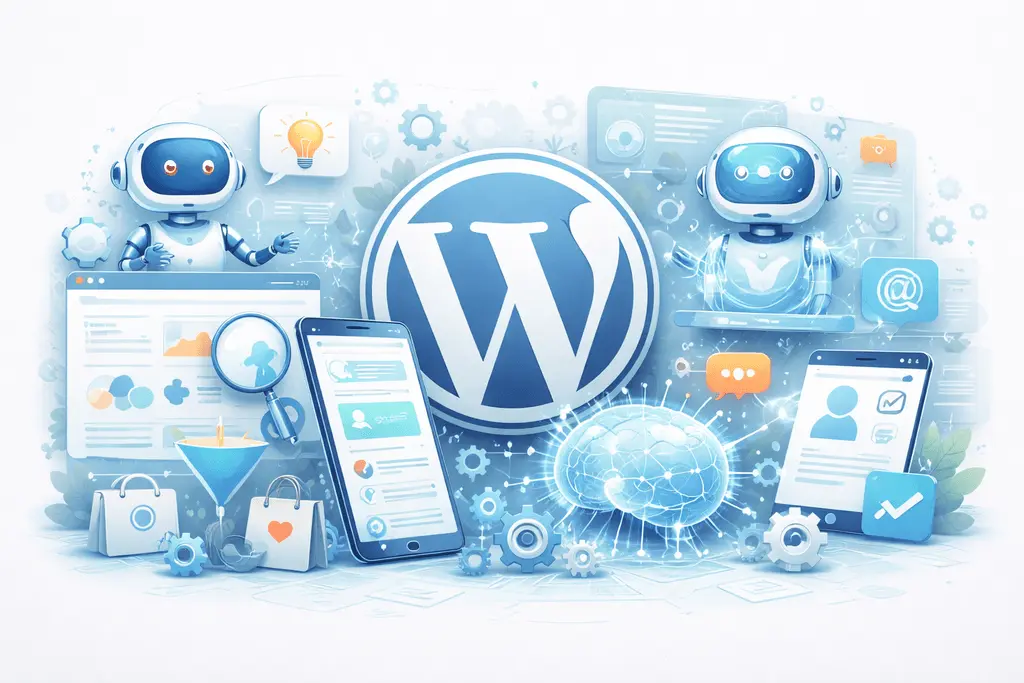
Artificial intelligence is rapidly changing how websites operate. For years, AI on websites meant simple chatbots answering basic questions. But in 2026, AI has evolved into something far more powerful.
Modern websites are becoming AI-native platforms — systems that use artificial intelligence to automate tasks, personalize user experiences, and optimize business processes in real time.
For businesses running WordPress, the opportunity is enormous. By integrating AI directly into the website architecture, companies can create smart digital experiences that improve conversions, automate workflows, and provide better customer support.
In this guide, we’ll explain how to build an AI-native WordPress website, the tools involved, and the practical use cases that go far beyond traditional chatbots.
What Is an AI-Native WordPress Website?
An AI-native website is designed with artificial intelligence as a core component of its functionality.
Instead of using AI only for content generation, these websites integrate AI into multiple parts of the user experience, including:
-
customer interaction
-
product recommendations
-
dynamic personalization
-
automated workflows
-
predictive analytics
Modern AI search platforms like Perplexity AI and emerging tools such as SearchGPT are also changing how users discover information online. This means websites must adapt to remain visible and competitive.
An AI-native WordPress website focuses on automation, personalization, and intelligent decision-making.
Why Businesses Are Moving Toward AI-Native Websites
Companies are adopting AI-powered websites because they deliver measurable business results.
1. Personalized User Experiences
AI systems can analyze user behavior and dynamically adjust website content based on visitor preferences.
For example:
-
displaying different landing pages for different audiences
-
recommending products based on browsing history
-
adapting messaging based on visitor location or intent
This level of personalization can significantly increase conversion rates.
2. Automated Customer Support
AI agents can handle many support requests automatically.
Instead of simple chatbots with scripted responses, modern AI assistants can:
-
answer complex product questions
-
recommend services
-
collect leads
-
guide users through onboarding processes
This reduces the workload for support teams while improving response time.
3. Intelligent Marketing Automation
AI tools can help websites optimize marketing strategies automatically.
Examples include:
-
automated email segmentation
-
personalized content recommendations
-
dynamic landing pages
-
predictive lead scoring
These capabilities allow businesses to operate more efficiently.
Key Components of an AI-Native WordPress Website
Building an AI-powered website requires combining several technologies and systems.
AI-Powered Content and Search
AI can dramatically improve how users discover information on your website.
Examples include:
-
AI search assistants that understand natural language queries
-
intelligent knowledge bases
-
dynamic FAQ systems
These systems help users find answers faster while improving engagement.
Predictive UX and Behavior Tracking
Predictive UX uses machine learning to anticipate user needs based on behavior.
Examples include:
-
recommending articles or products
-
adjusting website navigation
-
highlighting relevant content
These systems help create more intuitive user journeys.
AI Automation Workflows
AI can automate many business processes connected to your website.
Examples include:
-
lead qualification
-
customer onboarding
-
appointment scheduling
-
automated support responses
WordPress can act as the central hub connecting these workflows.
Example AI Use Cases for WordPress Websites
Here are some practical ways businesses are using AI within WordPress websites.
AI-Driven Product Recommendations
E-commerce websites can analyze user behavior to recommend relevant products in real time.
This increases:
-
average order value
-
conversion rates
-
customer satisfaction
Smart Lead Qualification
AI tools can analyze visitor behavior and identify high-intent prospects.
This allows sales teams to focus on the most promising leads.
AI Knowledge Bases
Instead of static documentation, AI can create interactive help systems that understand questions and generate accurate answers.
This improves customer support while reducing operational costs.
Tools and Technologies Used in AI-Native WordPress Sites
Creating an AI-powered website typically involves integrating several technologies.
Common components include:
-
AI APIs for automation
-
analytics platforms
-
personalization tools
-
workflow automation systems
-
custom WordPress development
WordPress is particularly well suited for this because of its flexibility and API ecosystem.
SEO Considerations for AI-Native Websites
Search engines and AI discovery tools are evolving quickly.
To remain visible in search results, websites should focus on:
Structured content
Well-organized content helps both search engines and AI systems understand your website.
Semantic architecture
Clear headings, structured data, and topic clusters improve discoverability.
High-quality information
Search algorithms increasingly prioritize information gain — content that provides new insights rather than repeating existing information.
Check out our The Ultimate WordPress SEO Checklist for 2026
Common Mistakes When Adding AI to WordPress
Many businesses rush into AI adoption without a clear strategy.
Common mistakes include:
Adding AI without clear use cases
AI should solve real problems, not just exist as a feature.
Ignoring website performance
AI integrations must not slow down your website.
Tools like Google PageSpeed Insights help monitor performance and maintain fast loading times.
Over-automating the user experience
Automation should enhance the experience, not replace human interaction completely.
The Future of AI-Native WordPress Websites
Over the next few years, AI-powered websites will become the standard rather than the exception.
We can expect:
-
autonomous AI support agents
-
predictive personalization engines
-
AI-generated dynamic interfaces
-
smarter search and recommendation systems
Businesses that adopt these technologies early will gain a significant competitive advantage.
Final Thoughts
WordPress remains one of the most flexible platforms for building advanced digital experiences.
By integrating artificial intelligence directly into the website architecture, businesses can create AI-native websites that automate tasks, personalize user journeys, and increase conversions.
The key is implementing AI strategically — focusing on real business outcomes rather than simply adding trendy features.
If you’re planning to build an AI-native WordPress website, our team can help you design and implement the right architecture.
🚀 Contact us today to discuss how AI can transform your WordPress website and create smarter digital experiences.
Trending articles
Ukraine vs Poland vs Balkans: Where to Hire the Best WordPress Developers in 2026
Why Eastern Europe Is the Smartest Place to Hire a WordPress Agency in 2026

Funnel Flattening: How Modern WooCommerce Stores Remove Checkout Friction

AI-Powered WooCommerce: How Smart Personalization Increases Conversions
╳
We`d love
to hear
from you
to hear
from you
Get a Best Project Consultation
Congratulations!
Message sent successfully!