


Edge Caching for WordPress: How to Achieve Global Performance in 2026
Date: 23/03/2026
Summary
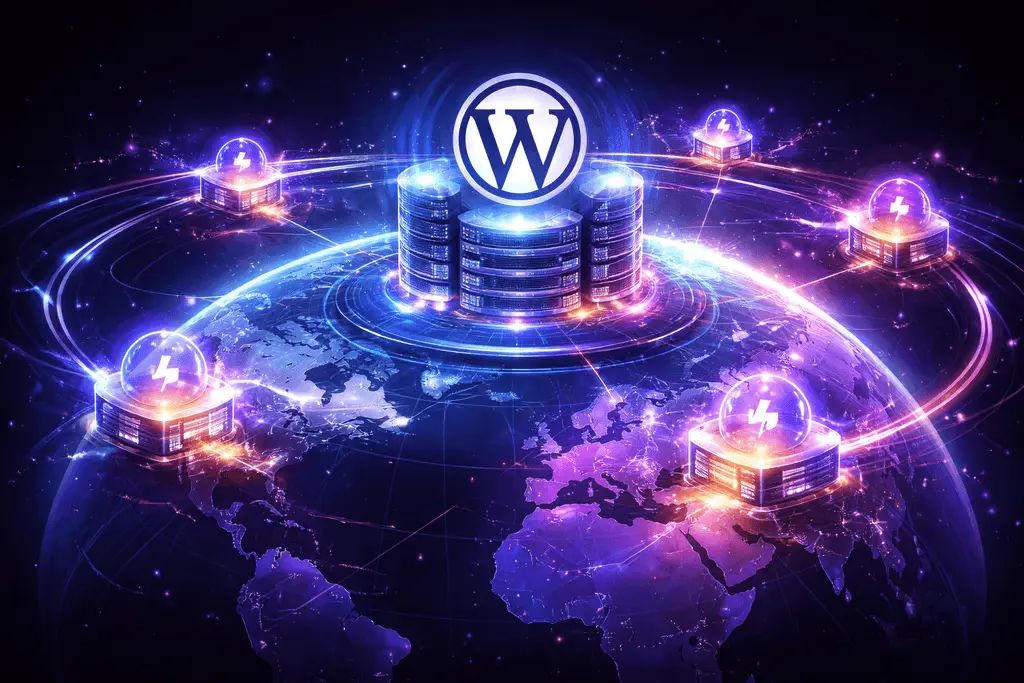
Website speed is no longer just a technical metric—it’s a direct ranking factor, conversion driver, and revenue multiplier.
In 2026, traditional caching is not enough. If your WordPress website serves a global audience, edge caching is the key to delivering lightning-fast experiences anywhere in the world.
This guide explains how to implement edge caching for WordPress, optimize your CDN strategy, and reduce global latency to near zero.
What Is Edge Caching?
Edge caching stores your website content on servers distributed across the globe (called edge locations), instead of relying solely on your origin server.
When a user visits your site:
- Content is delivered from the nearest edge server
- Requests don’t need to travel to your main hosting server
- Load times decrease dramatically
👉 Result: Faster load speeds, better SEO rankings, and higher conversions
Why Edge Caching Matters in 2026
User expectations are higher than ever:
- ⏱ Users expect load times under 2 seconds
- 🌍 Global audiences demand consistent speed
- 📉 Slow websites increase bounce rates and reduce conversions
Search engines prioritize performance:
- Google Core Web Vitals directly impact rankings
- Latency affects crawling and indexing
👉 Without edge caching, your WordPress site is at a disadvantage.
Traditional Caching vs Edge Caching
Traditional WordPress Caching
- Page caching on server
- Object caching (Redis/Memcached)
- Browser caching
Limitations:
- Still dependent on origin server location
- Slower for international traffic
- Limited scalability
Edge Caching (Modern Approach)
- Full-page caching at CDN level
- Dynamic content caching at the edge
- Edge computing for logic execution
Advantages:
- 🌍 Global performance optimization
- ⚡ Ultra-low latency delivery
- 📈 Better scalability under high traffic
How Edge Caching Works
- User requests your website
- Request is routed to nearest CDN edge node
- Cached content is delivered instantly
- If not cached, edge fetches from origin and stores it
👉 Over time, most traffic is served entirely from the edge.
Building a Modern CDN Strategy for WordPress
A strong CDN strategy is the foundation of edge caching.
Key Components
1. Global CDN Network
Choose a CDN with extensive global coverage:
- Cloudflare
- Fastly
- AWS CloudFront
Look for:
- Edge locations in your target markets
- Low latency routing
- High cache hit ratio
2. Full-Page Edge Caching
Move beyond static assets:
- Cache full HTML pages at the edge
- Use cache rules to control behavior
- Implement smart cache purging
👉 This delivers the biggest performance gains.
3. Dynamic Content Optimization
Not everything can be cached—but most can be optimized.
Use:
- Edge Side Includes (ESI)
- AJAX-based personalization
- Cookie-based cache variation
4. Cache Invalidation Strategy
Critical for WordPress:
- Auto-purge cache on content updates
- Selective cache clearing (not full purge)
- Versioned assets
👉 Poor cache invalidation = broken user experience
Edge Computing for WordPress
Edge caching becomes even more powerful when combined with edge computing.
This allows logic to run at the CDN level instead of your server.
Use Cases
- Redirects based on location
- A/B testing at the edge
- Bot filtering and security rules
- Personalization without backend load
👉 This reduces server load and improves response times even further.
Reducing Global Latency: Practical Tips
To maximize performance:
✅ Use a Lightweight Theme
Avoid bloated themes and unnecessary scripts
✅ Optimize Assets
- Compress images (WebP/AVIF)
- Minify CSS and JavaScript
- Lazy load media
✅ Implement HTTP/3 and QUIC
Modern protocols improve:
- Connection speed
- Data transfer efficiency
✅ Prioritize Cache Hit Ratio
The higher your cache hit ratio:
- The fewer requests reach your origin server
- The faster your site becomes globally
Common Mistakes to Avoid
❌ Relying only on hosting-level caching
❌ Not caching HTML pages
❌ Ignoring mobile performance
❌ Poor cache invalidation setup
❌ Overusing plugins that bypass caching
👉 These issues can completely negate the benefits of edge caching.
Business Impact of Edge Caching
Implementing edge caching is not just technical—it’s strategic.
Results You Can Expect:
- ⚡ 30–70% faster load times globally
- 📈 Higher conversion rates
- 🔍 Improved SEO rankings
- 💰 Reduced server costs
- 📊 Better Core Web Vitals scores
👉 For B2B companies, this directly translates into more leads and higher revenue.
The Future: Edge-First WordPress Architecture
In 2026, the best-performing WordPress websites follow an edge-first approach:
- CDN handles delivery
- Edge handles logic
- Origin server becomes secondary
👉 This is how modern high-performance websites are built.
🚀 Want to Make Your WordPress Site Globally Fast?
At Betlace, we design and optimize WordPress websites with enterprise-level performance using edge caching and modern CDN architecture.
If your site is slow internationally or struggling with Core Web Vitals—we can fix it.
Trending articles

Ukraine vs Poland vs Balkans: Where to Hire the Best WordPress Developers in 2026
Why Eastern Europe Is the Smartest Place to Hire a WordPress Agency in 2026

Funnel Flattening: How Modern WooCommerce Stores Remove Checkout Friction

AI-Powered WooCommerce: How Smart Personalization Increases Conversions
╳
We`d love
to hear
from you
to hear
from you
Get a Best Project Consultation
Congratulations!
Message sent successfully!